Minority Rights and Freedom in the 21st Century: Has Multiculturalism failed in Europe?

November 11 2013

The Research Council of Norway, the Fritt Ord Foundation and UiT The Arctic University of Norway invite the public to an open lecture on Thursday 14 November, 2013, at 14:15–16:00 at Auditorium B-1005, Dept. of Humanities, Social Sciences and Education, Breiviklia, UiT.
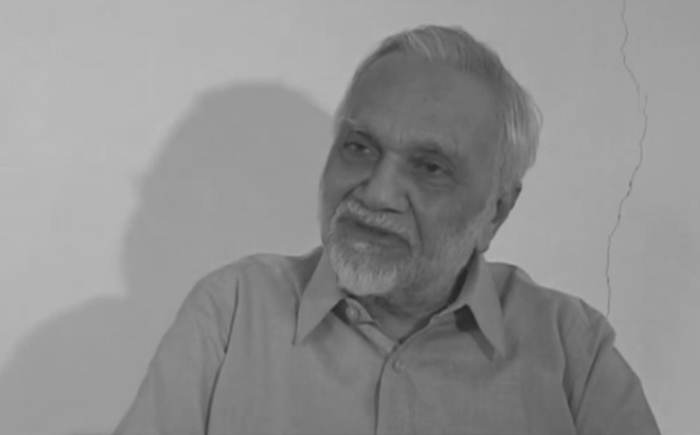
Lord Bhikhu Parekh is one of today’s foremost experts on immigration, minorities and multicultural co-existence. Born in India, Lord Parekh was educated in India and the UK. As a researcher and political philosopher, he has been a key contributor to the debate on multiculturalism over a number of decades.

His book Rethinking Multiculturalism: Cultural Diversity and Political Theory (2002) is considered a modern classic and A New Politics of Identity: Political Principles for an Independent World (2008) has secured his position as a leading theoretician in the field.

Lord Parekh is also active in the debate on how a modern, multicultural society can be formed in practice. From 1998 to 2000 he was appointed by the UK Government to head the “Commission on the Future of Multi-Ethnic Britain.”. The commission’s report, published in 2000, played a role in the formulation of government policy on ethnic minorities in the UK.

Many of the issues Lord Parekh addresses are directly relevant to the public debate in Norway and of special interest in the context of a region with a rich history of multiculturalism. Bhikhu Parekh is Professor of Political Philosophy at the University of Westminster. He has been awarded a number of honours and has held a seat in the British House of Lords since 2000.

This lecture is the fourth in the 1814 lectures series. Previous lecturers include Quentin Skinner, Jan-Werner Müller and Lynn Hunt at the University of Bergen, the University of Oslo and the Norwegian University of Science and Technology. The lectures in the series do all in some way reflect the key constitutional concept of Liberty.

The lecture will be transmitted live: Live broadcast
News

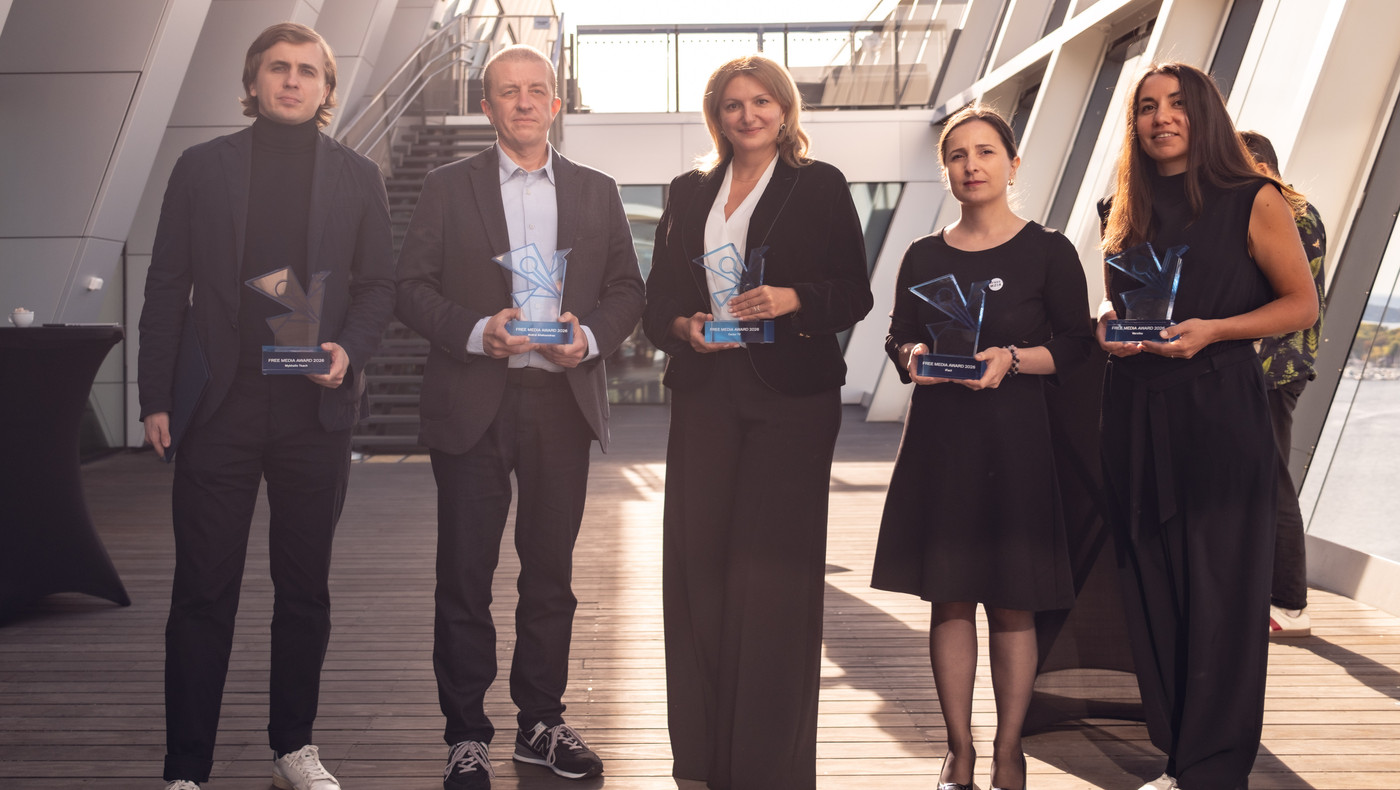
Mykhailo Tkach, Andrei Aliaksandrau, Arevhat Sahakyan (Factor TV), Nino Bakradze (iFact), and Lola Tagaeva (Verstka).

Free Media Awards for 2026. Press freedom under pressure in wartime: – Silence does not protect democracy

September 29 2026

This year’s winners of the Free Media Awards from the Fritt Ord Foundation and Zeit Stiftung Bucerius received their awards in Toppsalen at the Munch Museum in Oslo on 29 September 2026.
The Belarusian journalist and media manager Andrei Aliaksandrau came straight to Oslo after spending over five years in prison for his work. Aliaksandrau dedicated the award to imprisoned journalists and editors in Belarus and quoted the Liverpool FC anthem: “You’ll never walk alone”.

Mykhailo Tkach heads investigations at Ukrainska Pravda, which uncovers corruption, even in a Ukraine fighting an existential war against Russia.
– I face charges in at least thirteen cases related to my work. I have been threatened. My team has been threatened. And what is our answer? To keep digging. Silence does not protect democracy. Journalism does.

Mykhailo Tkach

Ukrainian, Georgian, Armenian, Russian and Belarusian journalists and media to receive five Free Media Awards for 2026

September 3 2026

This year’s prize laureates for the Free Media Awards from the Fritt Ord Foundation and Zeit Stiftung Bucerius are:
The investigative journalist Mykhailo Tkach from Ukraine
The investigative media outlet iFact from Georgia
The online media Factor TV from Armenia
The online media Verstka from Russia (in exile)
The journalist and media director Andrei Aliaksandrau from Belarus (imprisoned)*

Fritt Ord's grants for master’s degrees

August 30 2026

Is your master’s project about freedom of expression, social debate or journalism? If so, you can apply for a student grant from the Fritt Ord Foundation.

The Freedom of Expression Foundation Tribute 2026

August 18 2026

The rap duo Karpe has been awarded the Freedom of Expression Foundation Tribute for giving voice to the experiences of many young people from minority backgrounds. Through the language of rap, they are expanding the space for the expression of identity and belonging.