Fritt Ord's grants for master’s degrees

August 30 2026

Is your master’s project about freedom of expression, social debate or journalism? If so, you can apply for a student grant from the Fritt Ord Foundation.
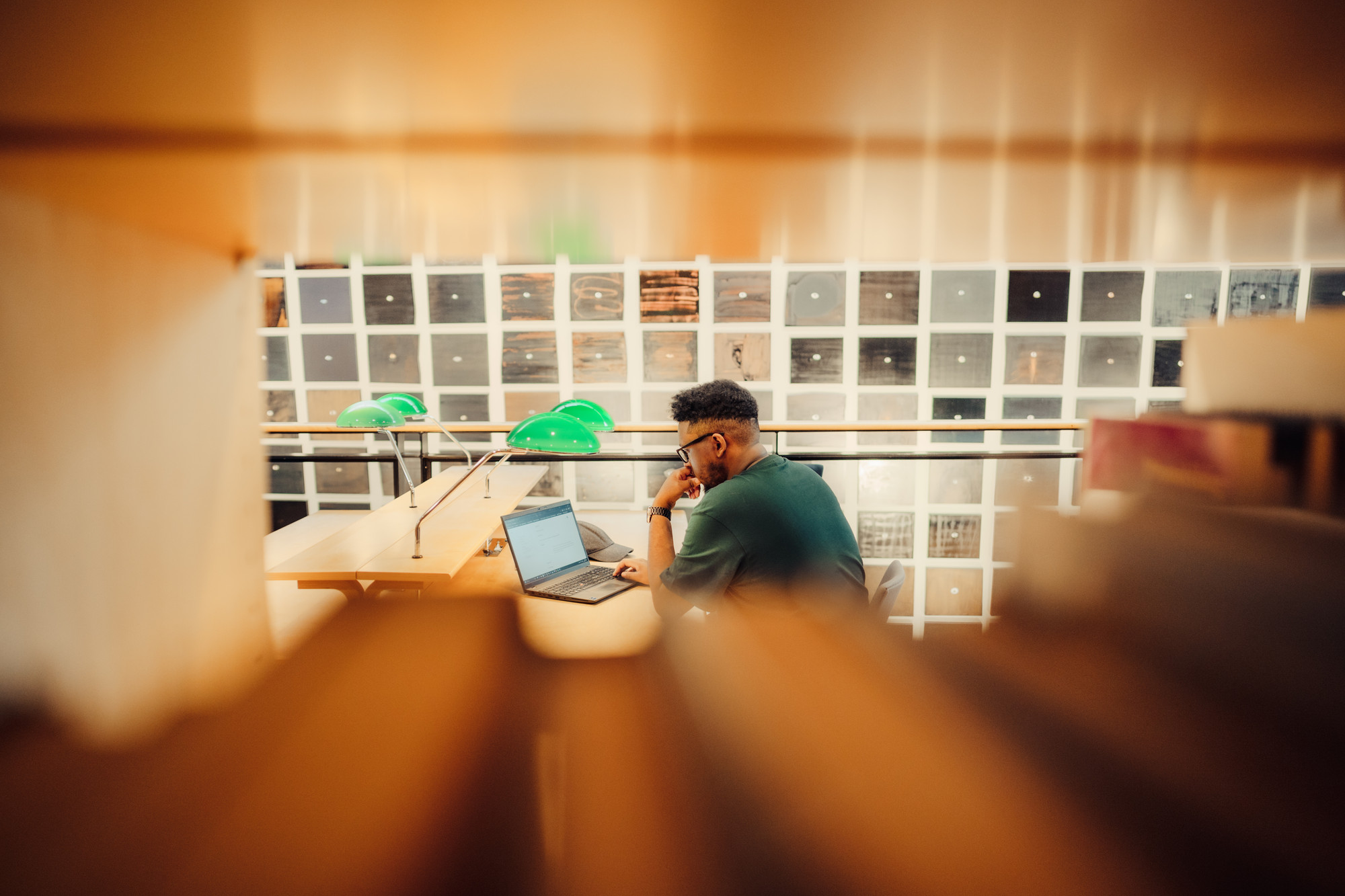
Is your master’s project about freedom of expression, social debate or journalism? If so, you are entitled to apply for a student research grant from the Fritt Ord Foundation.
The Fritt Ord Foundation invites applications for grants for master’s degree projects that address freedom of expression in the legal sense and/or the culture of freedom of expression in a broader, cultural sense. The role of technology for freedom of expression and the culture of freedom of expression, minorities and other social groups’ relationship to and experience of freedom of expression are also key topics.

We would encourage projects that are critical and analytical. Projects that require support for relevant travel, research and data acquisition will be given priority.
The grants are for NOK 40 000 each.

Applications are to be submitted on the Fritt Ord Foundation’s application form by 3 p.m. on September 12

Please include the following information: project title, issue for discussion, method and theoretical perspectives employed. Attach a project description, CV, transcripts of academic records and a reference from your supervisor.

The application form can be found in our application centre

Select ‘Application centre’ and the programme ‘Project support – 2025 – Deadline – Student research grants’

There are several deadlines for applications throughout the academic year: June 6 (passed) and September 15 in 2025.

If you are in doubt about whether you are qualified to apply, contact Joakim Lie, project manager at joakim@frittord.no
News

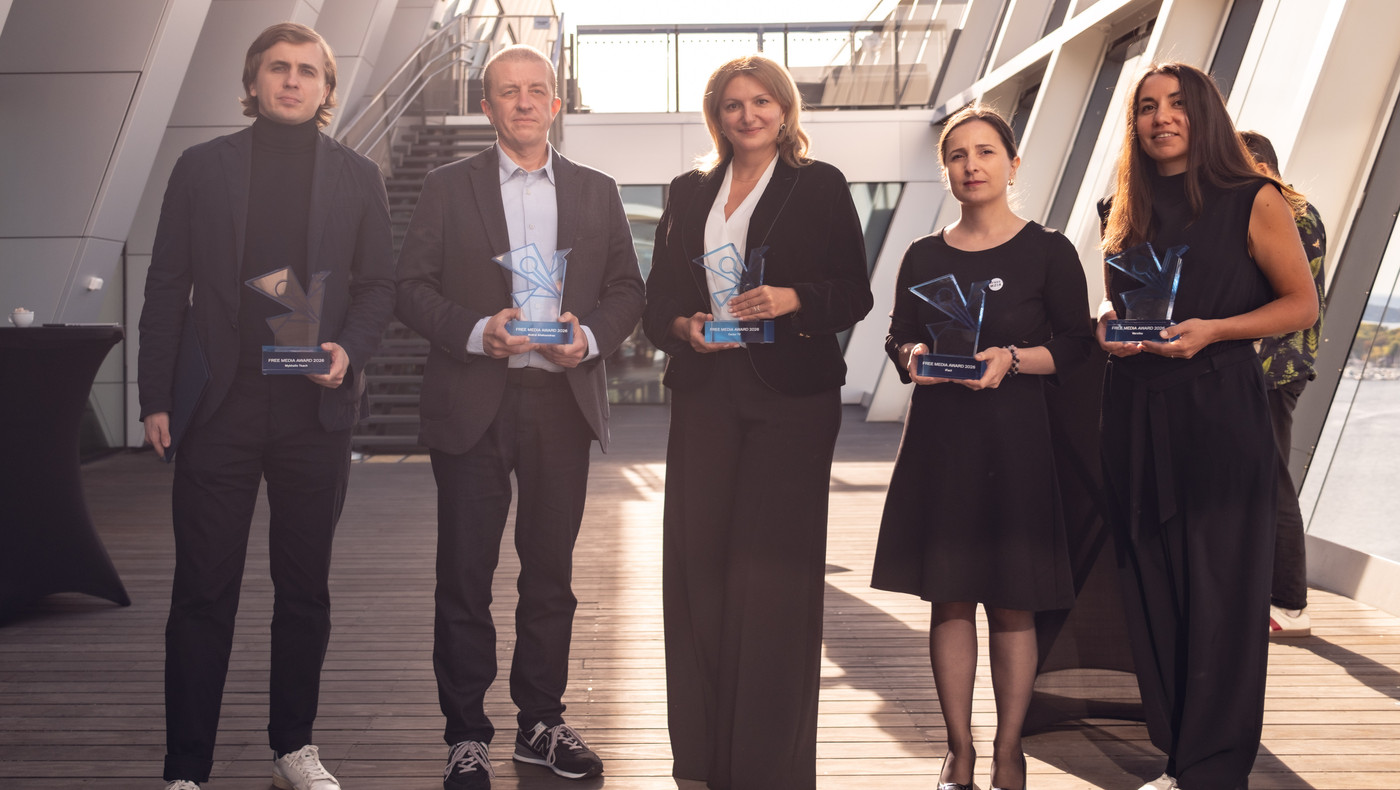
Mykhailo Tkach, Andrei Aliaksandrau, Arevhat Sahakyan (Factor TV), Nino Bakradze (iFact), and Lola Tagaeva (Verstka).

Free Media Awards for 2026. Press freedom under pressure in wartime: – Silence does not protect democracy

September 29 2026

This year’s winners of the Free Media Awards from the Fritt Ord Foundation and Zeit Stiftung Bucerius received their awards in Toppsalen at the Munch Museum in Oslo on 29 September 2026.
The Belarusian journalist and media manager Andrei Aliaksandrau came straight to Oslo after spending over five years in prison for his work. Aliaksandrau dedicated the award to imprisoned journalists and editors in Belarus and quoted the Liverpool FC anthem: “You’ll never walk alone”.

Mykhailo Tkach heads investigations at Ukrainska Pravda, which uncovers corruption, even in a Ukraine fighting an existential war against Russia.
– I face charges in at least thirteen cases related to my work. I have been threatened. My team has been threatened. And what is our answer? To keep digging. Silence does not protect democracy. Journalism does.

Mykhailo Tkach

Ukrainian, Georgian, Armenian, Russian and Belarusian journalists and media to receive five Free Media Awards for 2026

September 3 2026

This year’s prize laureates for the Free Media Awards from the Fritt Ord Foundation and Zeit Stiftung Bucerius are:
The investigative journalist Mykhailo Tkach from Ukraine
The investigative media outlet iFact from Georgia
The online media Factor TV from Armenia
The online media Verstka from Russia (in exile)
The journalist and media director Andrei Aliaksandrau from Belarus (imprisoned)*

The Freedom of Expression Foundation Tribute 2026

August 18 2026

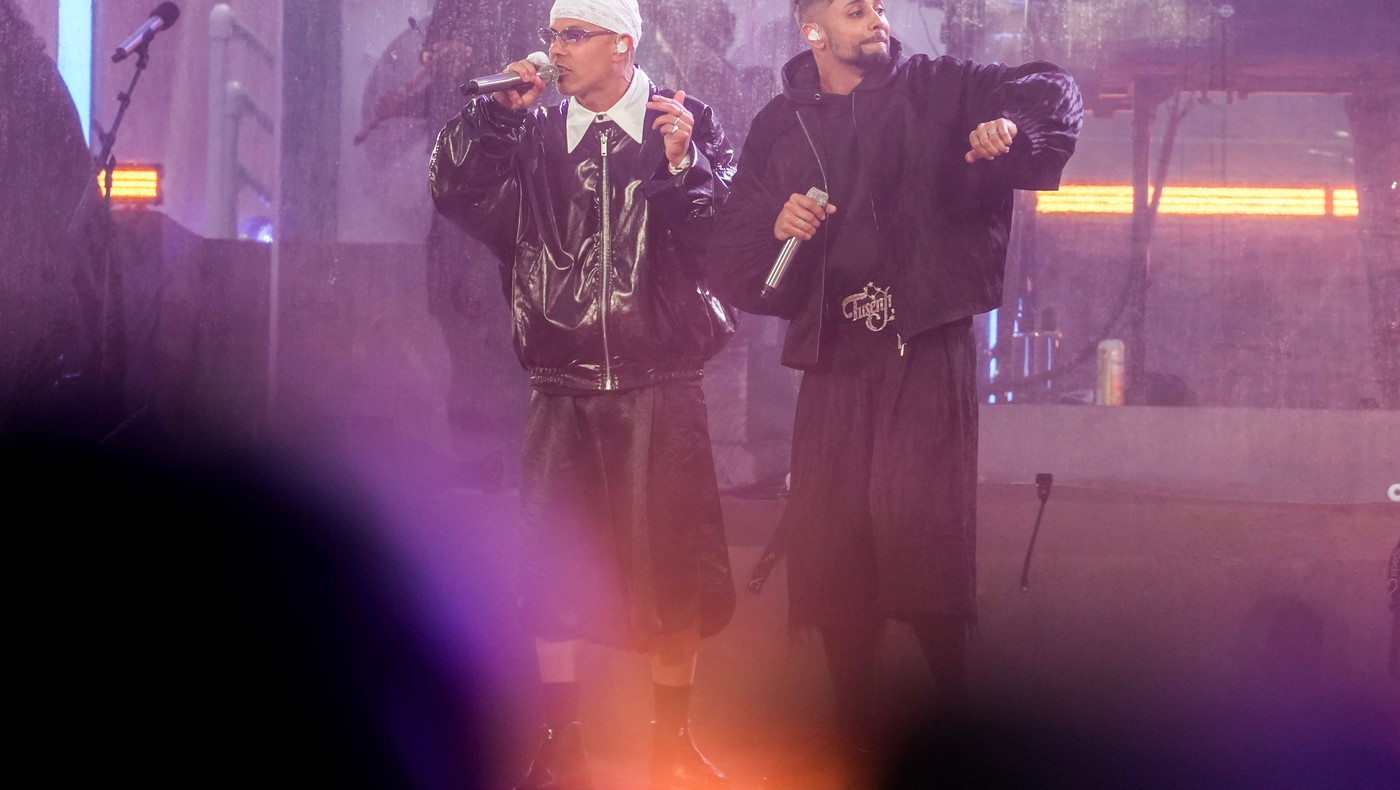
The rap duo Karpe has been awarded the Freedom of Expression Foundation Tribute for giving voice to the experiences of many young people from minority backgrounds. Through the language of rap, they are expanding the space for the expression of identity and belonging.

The 2025/26 Monitor survey

June 17 2026

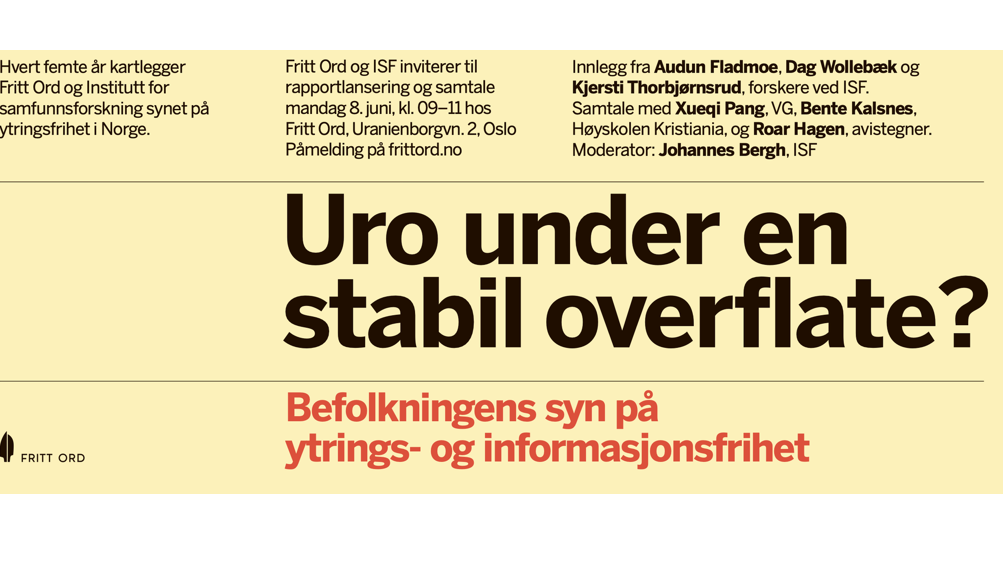
The Fritt Ord Foundation and the Institute for Social Research (ISF) invite you to the launch of a report and a subsequent discussion on Monday, 8 June 2026, from 9.00 to 11.00 am, at Fritt Ord’s premises at Uranienborgveien 2 in Oslo.

Where do people draw the line when it comes to freedom of expression, and what do they believe to be the greatest threats to an informed debate at a time characterised by unrest, crises and international conflicts? Do they feel there is sufficient diversity of opinion and enough room for divergent viewpoints? And how do people assess access to truthful and relevant information in a media landscape featuring new formats, new voices and artificial intelligence?