Opptak fra pressepristildelingen og Gry Larsens tale
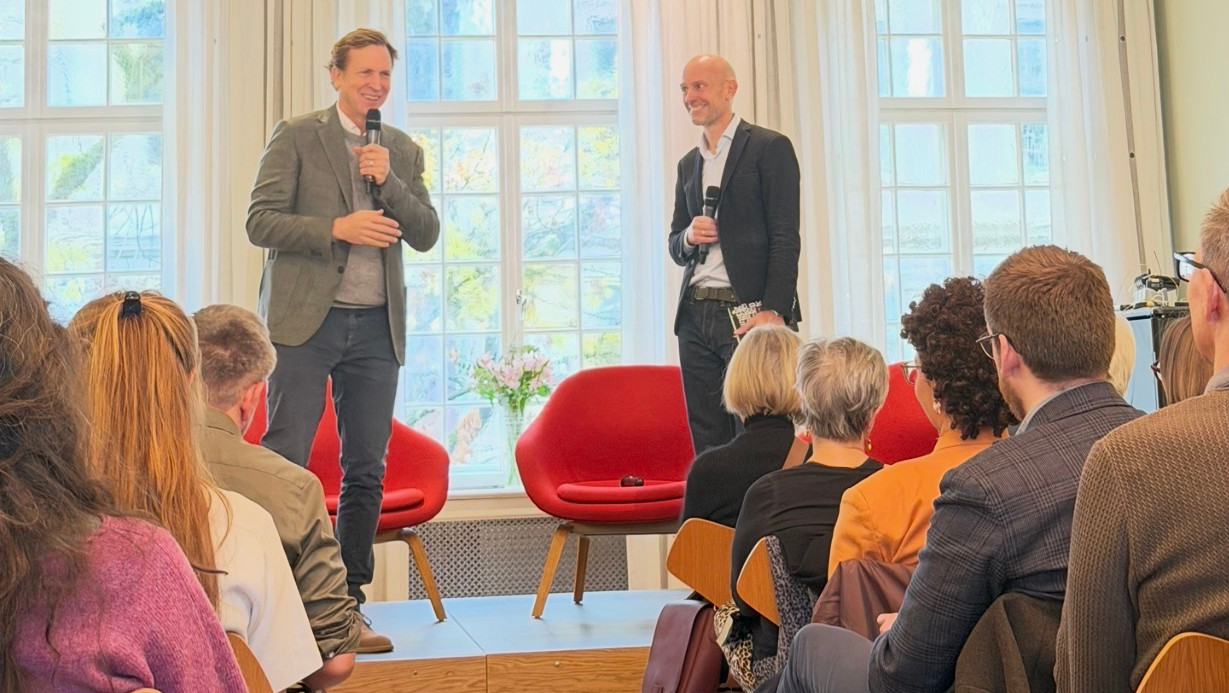
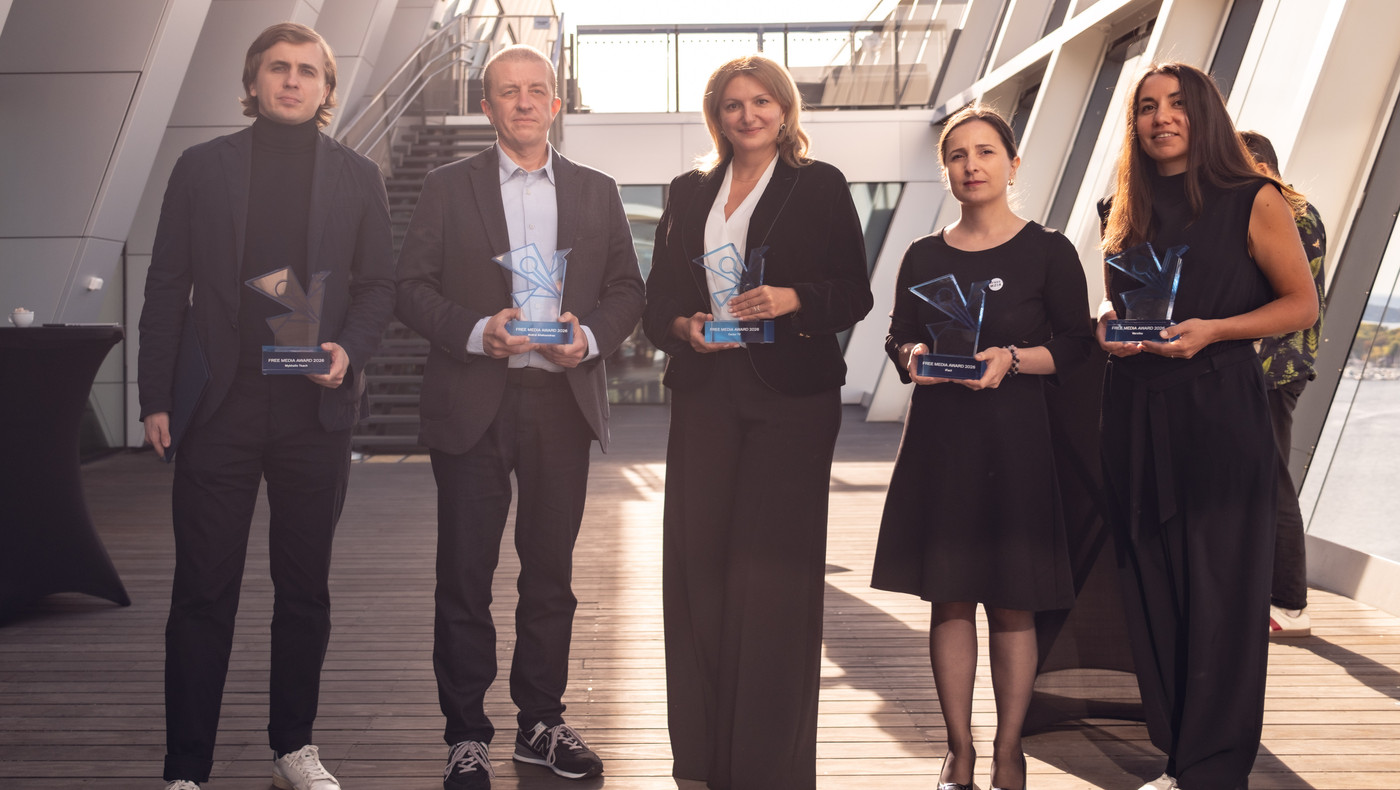
Fritt Ords og Zeit-Stiftungs pressepriser for Russland og Øst-Europa ble delt ut i Det Norske Nobelinstitutt torsdag 20. juni kl. 12.00. Opptak fra arrangementet er tilgjengelig på Fritt Ords YouTube-kanal.
Statssekretær Gry Larsen i Utenriksdepartementet holdt gratulasjonstalen til prisvinnerne:
Tale ved Fritt Ords og ZEIT-Stiftungs pressepriser for 2013
Honoured laureates, ladies and gentlemen. It is a great honour for me to be here and to have been invited to this prestigious event here at the Nobel Institute today. Last time the prize was awarded in Oslo, Minister of Foreign Affairs Jonas Gahr Støre had the honour of greeting the winners. Today I have the privilege of following up that tradition.
This year, the laureates, as you all know, come from Russia, Azerbaijan and Ukraine.
Without interfering in the work of the jury: In my view, the jury has – once again – made a very good decision. The jury has chosen laureates who in different ways, and under severe pressure, have promoted free speech in their own countries. The laureates know better than many others what freedom of expression really means. Indeed, some of them take serious personal risks when executing their work.
You are brave, and you are an inspiration to all of us that believe in the value of freedom of expression.
We all know that journalists in many countries are threatened, imprisoned and even killed just for doing their job – using their pen, computer, mobile phone, camera or microphone. All states are responsible for the safety of their people, including journalists, but we also know that not all states take this responsibility as seriously as they should.
Sadly, there are still many countries around the world in which governments stifle dissent and criticism or fail to prevent other groups from targeting the media. There are also many examples of violence and other human rights violations against journalists occurring with impunity.
Dear friends,
This is one of the reasons why Norway has made freedom of expression a key priority in Norway’s human rights policy. The reason for that is not only that Freedom of expression is a cornerstone of democracy, but the fact that it is essential for the realisation of other fundamental freedoms and rights – be they freedom of assembly, freedom of religion or the right to have access to information.
It is therefore worrying that restrictions on freedom of expression and threats to journalists are still common in many countries, even in Europe.
In practice, freedom of expression is frequently restricted through tactics that include restrictions on news and information, restrictive press legislation, threats, intimidation and physical attacks on journalists, bloggers and others who voice their opinions. We also see the use of censorship, control and surveillance of the various channels people use to express themselves.
The contemporary challenges to freedom of expression are manifold. In addition to censorship and surveillance challenges, the concentration of media ownership, for example through mergers and acquisitions, may also serve to restrict expression and the exchange of opinions.
Moreover, in the present situation, with the financial crisis, many media companies and publishing houses are hit hard during the last years. All of these trends may indicate that the space for freedom of expression is not increasing, but is in fact diminishing.
As you all know, the last years much attention has been given to the way in which new technologies provide new and enhanced opportunities for expression. Social media enable individuals to express themselves, to form a platform for their opinions and share them with the world instantly.
With every novelty, however, comes regulations, and as the new technologies have developed, so too has the ability to monitor, filter, censor and block them.
The potential for communication brought about by the Internet is matched only by its potential as a surveillance tool. In many countries, surveillance of human rights defenders and journalists has been well documented.
This is totally unacceptable.
We intend to maintain our focus on this issue in the coming years.
Dear friends,
We sometimes forget that in countries where independent journalism carries risks, the journalists most exposed are not only found in the capital cities and the national media. Journalists working outside the capitals and addressing local issues may often be in an even more exposed position.
Therefore, I am very pleased that one of the prize winners we are honouring today is Tahmina Tagizade – an independent journalist who has been working in the provincial town of Ganja and the surrounding region in northern Azerbaijan. Undeterred by reprisals, Tahmina has for many years been carrying on her important journalistic work, addressing local as well as national issues. She deserves great recognition for her courage and perseverance.
Along with Táhmina Tagizáde, the independent north Siberian newspaper Yakutsk Vecherny is a very fine example of journalistic bravery taking place far away from capital cities. The journalists of Yakutsk Vecherny and its editor Maria Ivánova have the courage to raise issues such as environmental hazards, corruption, human rights, democracy, and freedom of expression. The brave work and integrity of these journalists, who live and write more than 8 000 km away from Moscow, is both impressive and inspiring.
The young and innovative Russian journalist Yelena Kostyuchenko has been assaulted and arrested for her brave journalistic work. This does not keep her from continuing to cover environmental issues, corruption and prostitution, or from steadfastly defending the rights of lesbian, gay, bisexual and transgender persons. Yelena, who is creative in her use of the Internet and blogging, was also the first journalist to write about the trial of the punk rock collective Pussy Riot. An outstanding journalist is not afraid of pursuing sensitive issues.
Alexander Golts is one of these outstanding journalists. He has been promoting openness and sharing his analyses of military issues in Russia for over 25 years. As the deputy editor of the Russian online newspaper Yezjenedelny Zhurnal, Alexander is an influential commentator on civil-military affairs. We have all heard the saying that a picture is worth a thousand words. Nowhere could this be more the case than in journalism.
Photojournalism is an essential dimension of the freedom of the press.
It is very appropriate that one of this year’s prizes goes to the young Azerbaijani photojournalist Mehman Huseynov. I am very sad that Meyhman Huseynov is not able to be present here today. If I understand it correctly, he was not allowed to leave his home country by the authorities. I was surprised and deeply saddened to learn this. I am all the more delighted that his mother is present. Mrs. Huseynova, you have every reason to be proud of your son. Mr. Huseynov’s pictures and recordings provide striking images of various aspects of today’s Azerbaijan. As Mehman has personally experienced, the power of images carries the same risks as the power of critical words. And it is no less important. Today’s prize is a well-deserved recognition of the significance of his work.
Even in a country like Ukraine critical journalism requires courage. As one of the best investigative journalists in the country, Sergey Leschenko does not shrink from shedding critical light on issues that challenge the personal interests of powerful figures and entities. Exposing corruption among the élite is just one example. The media situation in Ukraine is characterised by strong private and political interests dominating media ownership. An essential counterbalance to these interests is provided by strong, independent individual journalists and media outlets that report in an open and critical manner on political and economic issues. Sergey is an outstanding representative of this group, and one of those who on a daily basis helps uphold the freedom of the press in Ukraine.
Honoured laureates,
Please continue your important work. Please do not lose courage when you are confronted with new obstacles. Please go on exercising your right to freedom of expression. I wish you every success in your extremely important work.
Thank you.