‘Exit, Voice, and Loyalty’
Two seminars on crises of democracy, organized in collaboration with The Arena Centre for European Studies, University of Oslo.
Tuesday 12 November, 14:00-16:00
House of Literature, Wergelandsveien 29, Oslo.
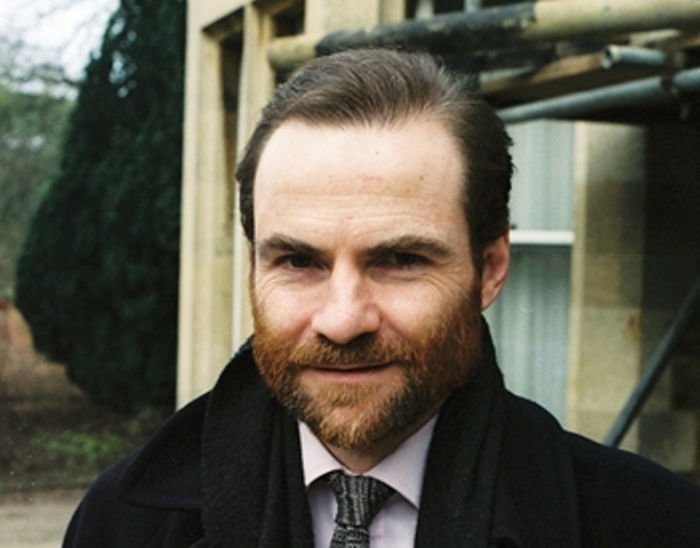
Timothy Garton Ash
RETHINKING EUROPE
Where is European politics heading? Can the EU transcend its present predicaments? How will Europe develop as compared to the US and China?
With comments by Christopher Lord and Cathrine Holst
Timothy Garton Ash is professor of European Studies in University of Oxford, senior fellow at the Hoover Institution, Stanford University, author and regular commentator in The Guardian and contributor to The New York Review of Books. His latest publication, Facts are Subversive: Political Writing from a Decade without a Name (2009) is a collection of essays on topics as varied as global warming, European integration, liberalism and geopolitics. He is the director of the Free Speech Debate Project, a research project and online platform for people around the world to discuss what is means to have freedom of expression. Garton Ash is an acute analyst of the changing predicaments of Europe.
Cathrine Holst holds a doctoral degree from the University of Bergen (2005) with the thesis Feminism, Epistemology & Morality. She is a Postdoctoral Fellow at the Department of Sociology and Human Geography, and senior researcher at ARENA. Her main fields of academic interest are political theory, democratic theory, philosophy of social science, the role of expertise in the EU, public debate on Europe (in particular the role of intellectuals), gender equality policies in Norway and the EU, feminist theory and gender studies.
Christopher Lord is professor at ARENA Centre for European Studies at the University of Oslo. He has done considerable research on questions of legitimacy, democracy and the European Union, and has published extensively on the topic. Among his recent projects is the development of a democratic audit of the EU. He has also worked on topics such as the history of British relations to the European Communities, EU foreign policy, political economy of monetary union and political parties in the EU.
PREVIOUS LECTURE
Intellectuals and the Crisis of Democracy in the 20th Century – The Odyssey of Albert O. Hirschman.
Thursday 24 October, 14:00-15.30
House of Literature, Wergelandsveien 29, Oslo.
Jeremy Adelman is professor of History at Princeton University. His most recent book is an intellectual biography of the writer and economist Albert O. Hirschman, titled Worldly Philosopher (2013). Professor Adelman is also the co-author of Worlds Together, Worlds Apart (2008), a history of the world. Adelman is currently working on a book on how intellectuals have grappled with social crises over the past century, from the breakdown of the classical liberal consensus in the aftermath of the First World War to the present.
With comments by Bernt Hagtvedt and John Erik Fossum.
Bernt Hagtvet, professor of political science at the University of Oslo. His work has mainly focused on issues of political totalitarianism and democracy. His last book is Ideologienes århundre (‘The Century of Ideologies’ 2010). In addition he has co-edited Folkemordenes svarte bok (‘Black book of Genocide’ 2008, second edition expected 2014) and Dreyer Publisher’s book series on totalitarianism (four published books at the time of writing).
John Erik Fossum, professor at ARENA Centre for European Studies at the University of Oslo. His main fields of interest include political theory, democracy and constitutionalism in the EU and Canada, europeanisation and transformation of the nation state. Among his recent books are Practices of Interparliamentary Coordination in International Politics (co-editor Ben Crum, 2013), Rethinking Democracy and the European Union (co-editor Erik O. Eriksen, 2012) and The Constitution’s Gift (co-author Agustín J. Menéndez, 2011).